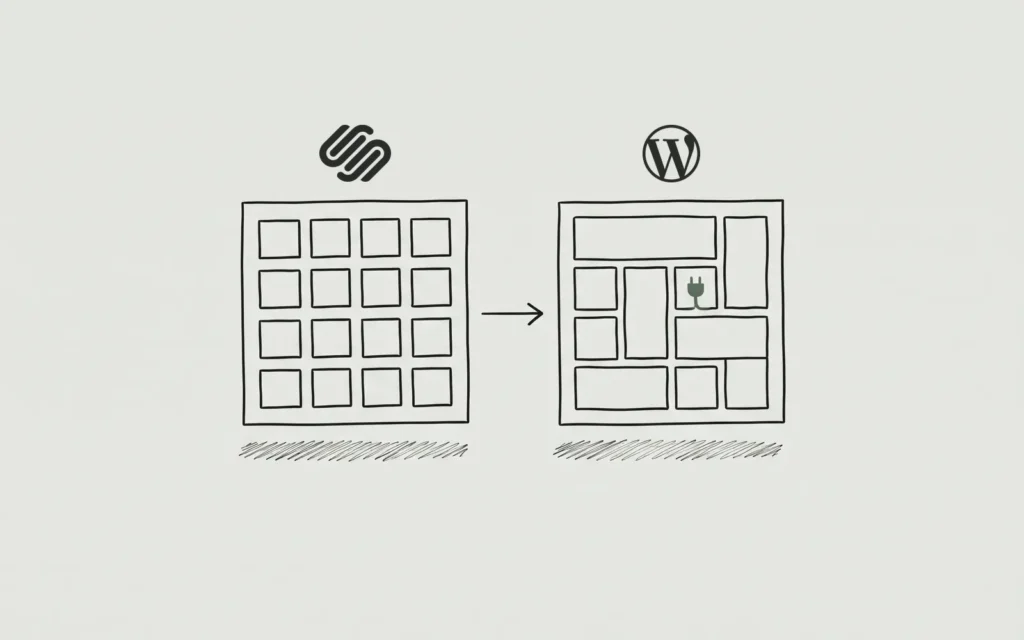
Wix for therapists
Wix is the better answer when you want a finished, decent-looking site live within a week, you have no content plan, and you will never need custom booking or a filterable staff directory.
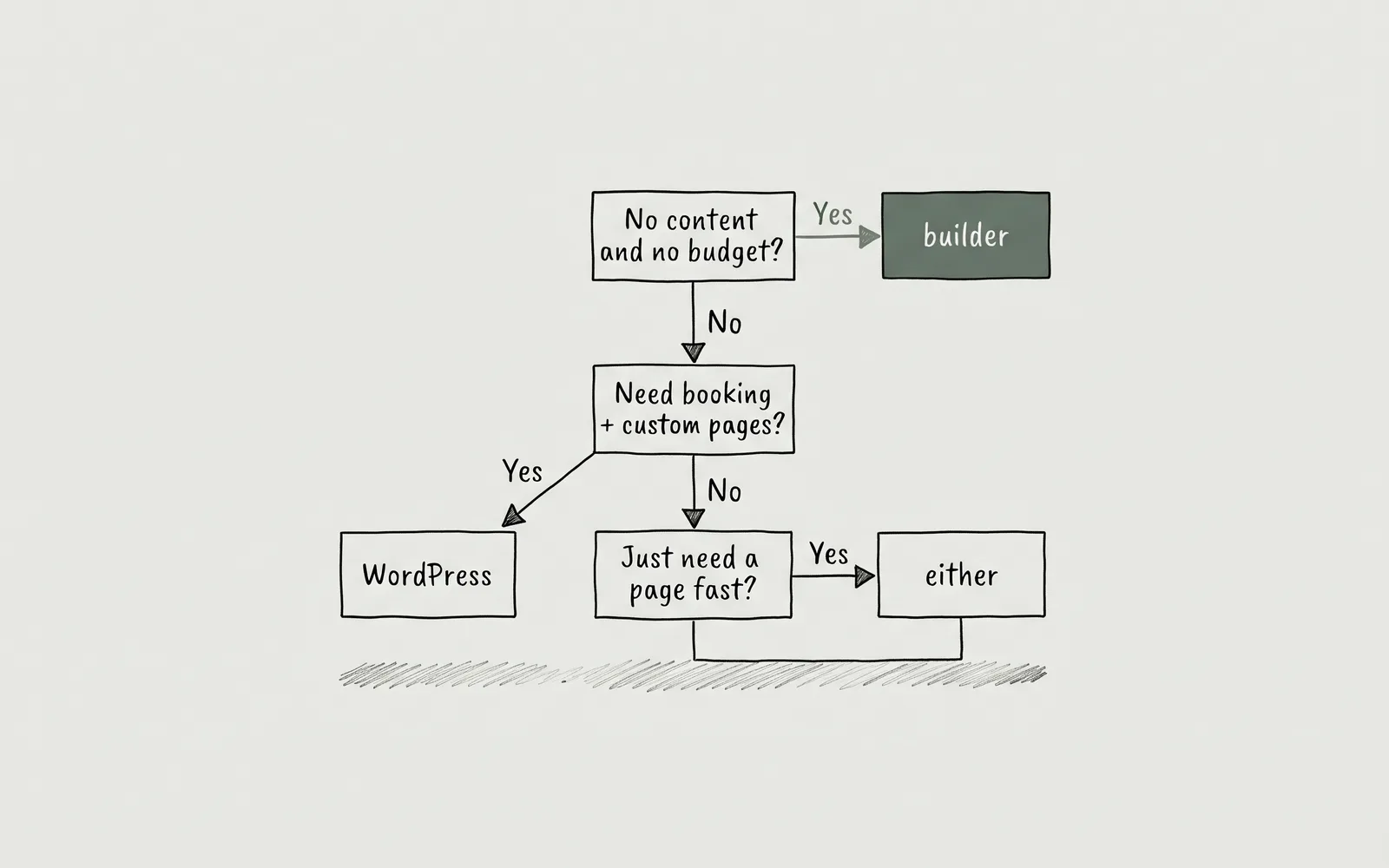
That is not a consolation prize. A solo therapist who sees eight clients a week and gets referrals from a directory does not need a publishing platform; they need five clear pages, a portrait and a form that reaches an inbox. Wix does that in an afternoon, from a template that already looks like a therapy practice, and it will not fall over because nobody updated a plugin.
The cost model is a subscription. Observed range as of November 2026: roughly £10 to £30 a month on annual billing for the plans a therapist actually uses, and past £100 a month only if you need the top commerce tier. A domain is extra unless you buy it through Wix. There is no build fee, which is why the entry price looks lower than a studio quote; the therapist website cost guide breaks down what that difference buys.
The ceiling is the problem, not the floor. Wix layouts are fixed once set, so a small desktop change can rearrange the mobile version. Booking is workable through Wix Bookings for simple appointment types, but clinical intake, insurance fields and routing between clinicians turn into workarounds. SEO basics are genuinely fine now — titles, descriptions, clean URLs, a sitemap — while structured data and redirect rules stay limited to what the platform exposes.
We build on WordPress, so weigh that. If your situation is the one in the opening paragraph — one clinician, a fixed page list, no intention of publishing — the honest recommendation is Wix or Squarespace, not us.
WordPress for therapists
WordPress is the better answer when the website has to carry the practice: specialty pages that need to rank, intake and booking wired to the system you already use, and content that keeps compounding after launch.
WordPress is free software, and that is the least interesting thing about it. What you are buying is control of the files: content, database, templates and redirects all belong to you, and the site can move host to host without a rebuild. For a practice that intends to publish, that matters more each year, because the archive becomes an asset rather than a sunk cost.
The cost model is hosting, a domain and whoever builds it. Observed range as of November 2026: £5 to £35 a month for hosting a therapy site, so roughly £70 to £450 a year before plugins, a theme licence or help. A studio build is a separate one-time fee; ours start at $290, and the line-by-line comparison is on the pricing page.
The honest downside is the first hour. WordPress will let you install six plugins and break a layout, and a badly configured site is slower and less accessible than a good Wix one. It also needs updates, backups and someone who notices when a form stops sending. That is a real running cost, and it is why maintenance is a paid line rather than a promise that the site looks after itself.
We are a WordPress studio. That is an interest, stated plainly rather than buried in a footer. The reason we build on it is narrower than loyalty: therapy sites grow in a particular way — a new specialty page, a fee change, an insurance panel, a second clinician — and WordPress absorbs that without a redesign. What we design into those pages is set out on the website design page.
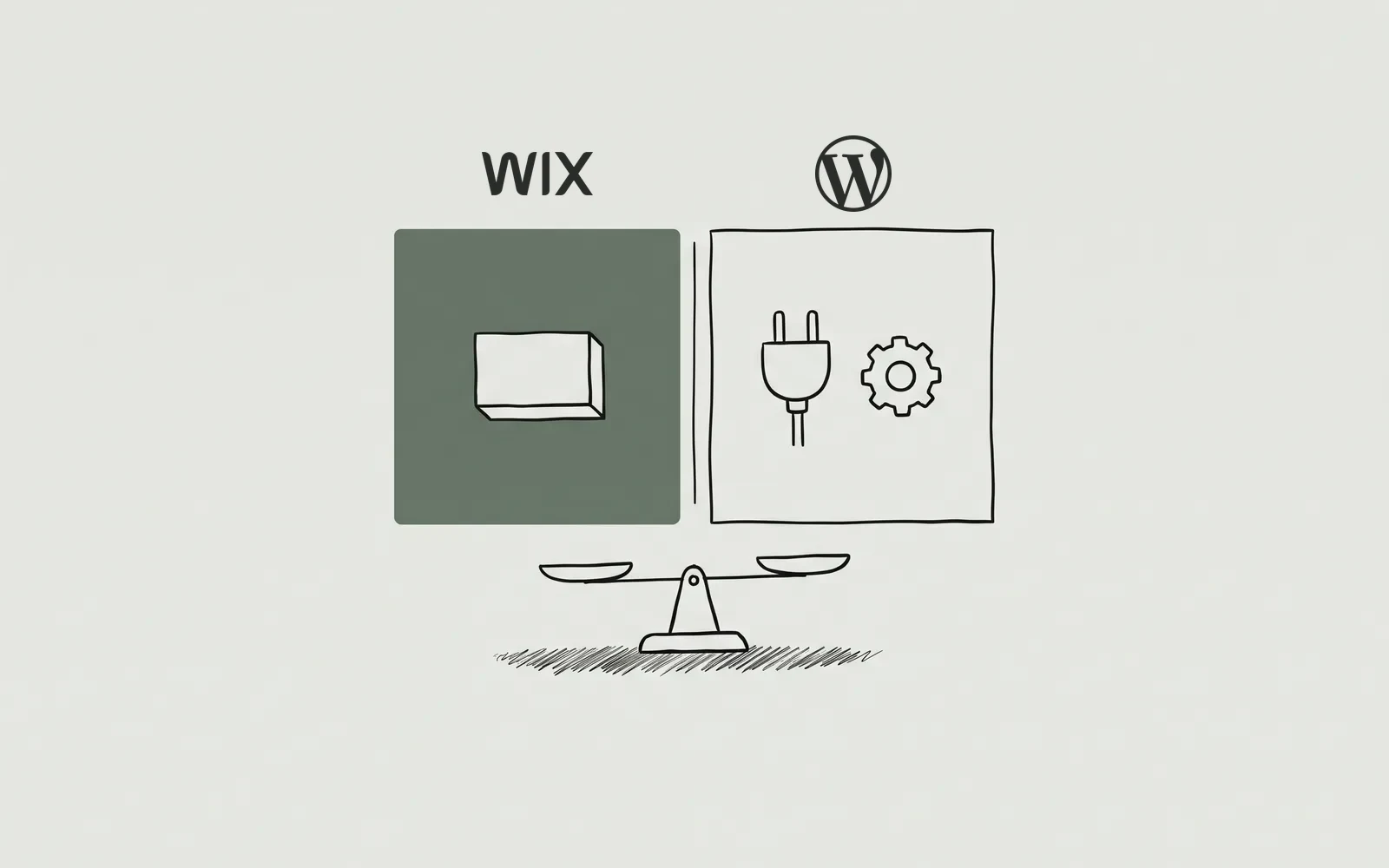
Wix vs WordPress for therapists: side by side
Seven rows, because these are the seven things that decide whether you are still happy in year two. Prices are observed ranges checked in November 2026, not quotes; both platforms change their plans, so confirm the current page before you buy.
Observed ranges and platform behaviour, checked November 2026
| What matters | Wix | WordPress |
|---|---|---|
| Cost model | Subscription only. Observed range November 2026: about £10–£30 a month on annual billing for the plans a solo therapist needs, and past £100 for the top commerce tier. Domain extra. | Software free. Hosting observed range November 2026: £5–£35 a month, so £70–£450 a year before plugins, a theme licence or help. Build fee separate. |
| Who owns the site | You own the words, the images and the domain if it is registered in your name. You do not own the platform, and nothing exports as a working site. | You own the files, the database, the content and the domain. The software is GPL and the host is portable. |
| Editing difficulty | Easiest to start. Drag-and-drop, but the layout is fixed once set, and a desktop tweak can rearrange the mobile version. | Steeper first hour. Block editor or a page builder, then no ceiling — and a badly built site is easy to break. |
| Booking and forms | Wix Bookings is built in and fine for simple appointment types. Clinical intake, insurance fields and clinician routing need workarounds. | No booking out of the box; a plugin or an embed. That is the point: it can be wired to the practice system you already run. |
| SEO control | Good basics: titles, descriptions, clean URLs, sitemap. Structured data and redirect rules are limited to what the platform exposes. | Full control over schema, redirects, permalinks, robots and caching. Also full responsibility for getting them right. |
| Migration difficulty | Hard to leave. Nothing exports as a working site, so a move is a rebuild with the copy pasted across. | Easy to leave. Content, database and files all export, and hosts move sites as routine work. |
| Accessibility | A checker and manual fixes exist, but template markup, heading order and contrast are not fully in your control. | Whatever the build makes it. Complete control over markup and headings — excellent or poor, depending on who built it. |
Two rows deserve a note. Ownership is the one people skip: with either hosted builder you own your words and your domain, but not a site you can take with you. Accessibility is the one people assume: no platform is accessible by default, and the real difference is whether you can fix what the template gets wrong.

Which should a therapist choose?
Match the practice, not the brand. Four shapes cover most of the therapists who ask us this question, and the answer changes with the shape rather than with taste.
Solo practice, first website, tight budget
Choose Wix or Squarespace. If the diary already fills from directories and the site is a calling card, £10–£25 a month is the rational spend. Put the difference into a portrait and a listing rather than a build you will not use.
Group practice with several clinicians
Choose WordPress. Team profiles, per-clinician fees, filterable insurance lists and person schema are ordinary WordPress work and awkward on a builder. Adding a clinician should be a page, not a redesign.
Insurance-heavy practice
Choose WordPress. Panels, fee schedules and eligibility change often enough that hand-edited pages go stale. Custom fields and one template keep the numbers accurate in a single place instead of six.
Content-heavy practice
Choose WordPress. If you will publish monthly for three years, the editorial control, internal linking and schema are worth more than the setup time. A builder blog works, but it will not compound the same way.
If you are still between two, ask who edits the site in month six. If the answer is you, on a Sunday, with no help, pick the platform with fewer moving parts. If the answer is a new page, a new clinician or a new insurance panel, pick the one that will not need rebuilding. Our own answers to the awkward questions are on the FAQ page, including the ones about ownership and what happens after launch.
Wix vs WordPress for therapists: the questions we are asked
Five answers, with numbers where a number exists. If your question is about process rather than platform, the main FAQ covers timelines, ownership and what happens after launch.
Can I move a Wix site to WordPress later?
Not as a website. Wix does not export a working site, so a move means rebuilding the layout on WordPress and copying the words and images across. The domain and the content survive; the design does not, and that is the cost to plan for.
Is Wix bad for SEO?
No. Wix handles titles, descriptions, clean URLs and a sitemap properly, which is most of the technical work for a local therapy site. What it limits is structured data and server-level redirects, so a practice with a large content archive or a complex migration will feel the ceiling.
How much does a Wix site cost a therapist each year?
Observed range as of November 2026: roughly £120 to £360 a year on annual billing for the plans a therapist needs, plus a domain at about £10 to £20. Add any third-party scheduling or email tool separately, because those are not inside the subscription.
Does Wix work for a group practice with several clinicians?
Only up to a point. You can build a profile page per clinician, but filterable directories, per-clinician fees and insurance panels become manual pages that go stale. A group of three or more is usually better served by WordPress, where one template handles the roster.
Can Wix take insurance details or clinical intake forms?
It can take a form, but a website form is the wrong place for clinical detail. Most practices route intake to a practice-management system and keep the site form to a name, an email and a sentence. Wix can link or embed that, but it will not manage it for you.
Where to go next
If you are weighing platforms, what a build actually costs sets the four options side by side, Website Design shows what a custom build includes, and the checklist covers what to prepare either way. When you are ready, price your own build.
General educational guidance, not clinical, legal, or financial advice.